What to Wear for a Photoshoot: Portraits and Editorial
Disolo Art · Updated
Wear solid colours or one clear pattern, real texture and clothes that fit you now, and bring two or three looks. Skip fine stripes, big logos and shoes you can't walk in.
Wear clothes that fit you well today, in solid colours or one clear pattern, with real texture, and bring two or three looks that feel like you on a good day. For portraits, keep the clothes a step quieter than your face. For editorial, pick one strong idea, such as a colour, a fabric or a silhouette, and build everything else around it. Leave behind fine stripes, big logos, anything you keep adjusting and shoes you can't walk in.
The rest of this guide explains why, with frames from our own work.
Start with the picture, not the closet
Before you open a wardrobe, decide what the photographs are for, because that decides how much the clothes should say.
- Headshots and professional portraits: the face leads. Choose a neckline and colour that frame it, and nothing that competes.
- Personal branding: wear what you would wear to do your work on your best day, then make it one notch sharper.
- Editorial: the outfit is part of the set. It carries the story as much as the location and the light do, so plan it together with your photographer, not alone the night before.
Share three to five reference images and the location with your photographer early. Clothes should either belong to the place or contrast with it on purpose; a linen suit in a snowy ravine can work, but only if everyone agreed it would.
Colour
Solid, medium-to-deep colours suit most people and most light. Keep each look within one colour family and let a single accent stand out.
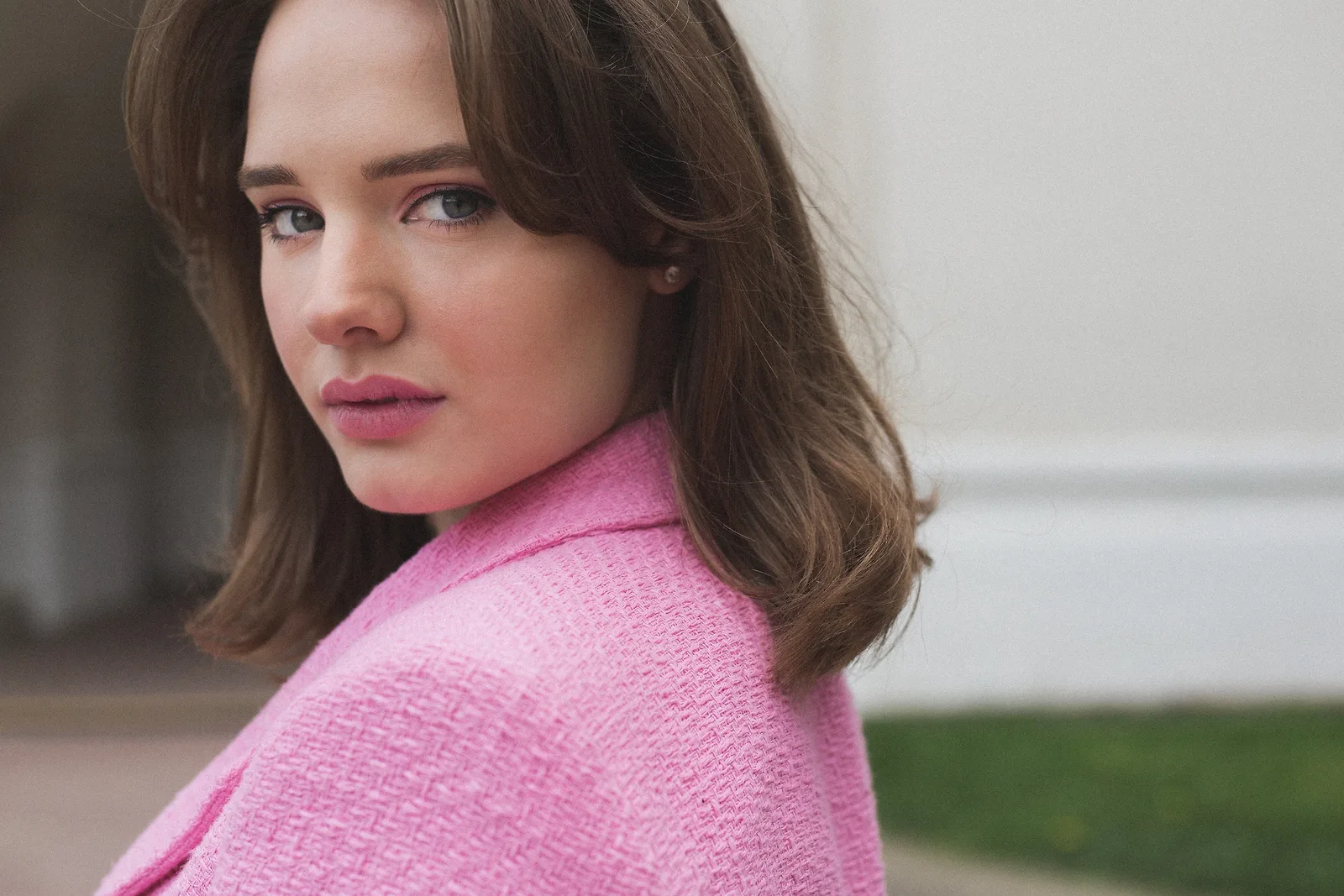
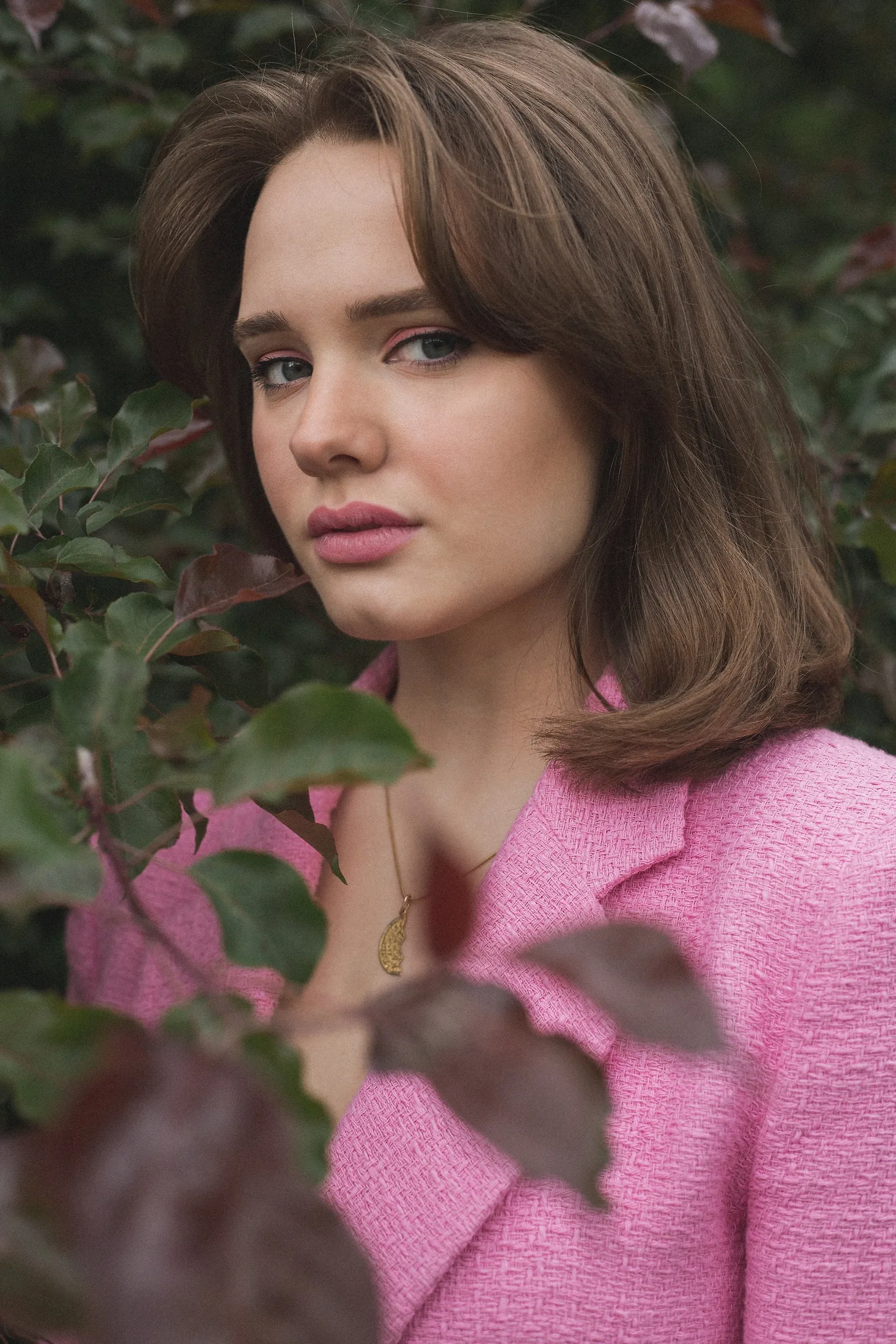
The cover frame of this post is a simple example. A pink tweed jacket against a white wall puts one soft colour on a plain background, so the eye goes straight to the face and the glance over the shoulder. The makeup picks up the same pink, and a single pearl stud is the only jewellery.
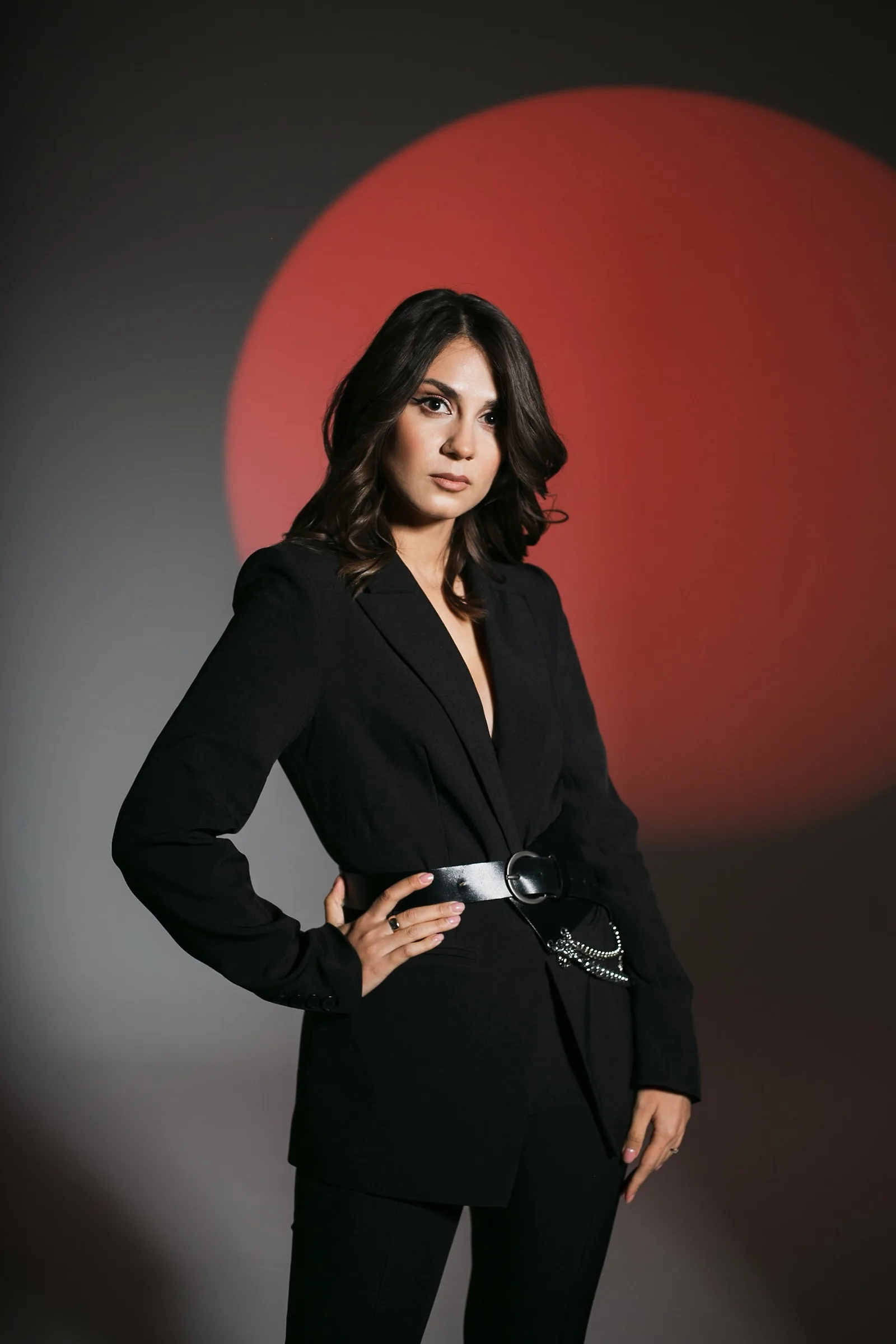
When the set or the light brings colour, the clothes can go quiet. Here a woman in a belted black suit stands in front of a red disc of light. The suit gives the shape and leaves the colour to the light.
A few colour notes that save frames:
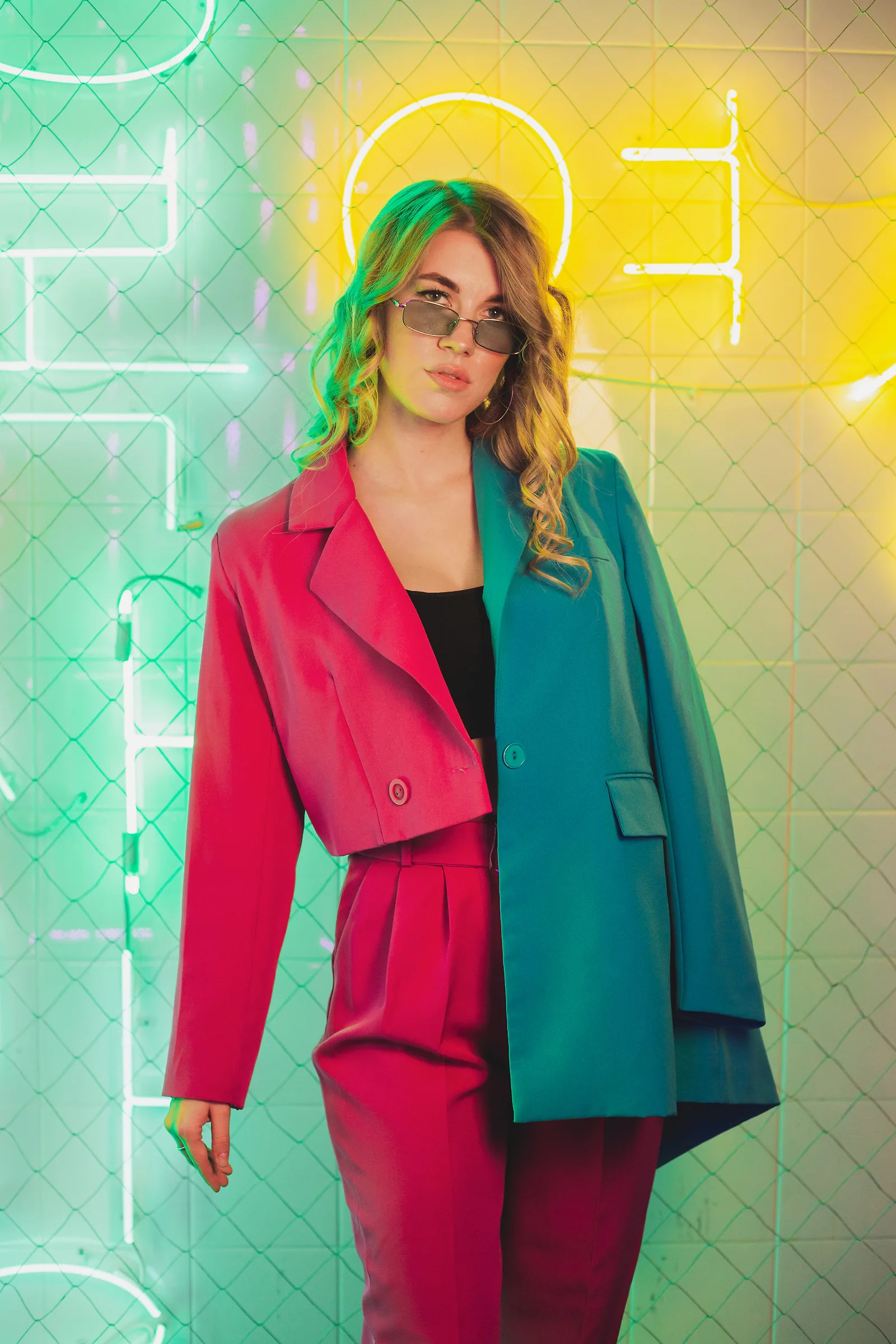
- Very bright saturated colours next to the face can reflect onto skin, especially in sun. Keep neon and acid green for accessories or for a look that is meant to be loud.
- Bright white can lose its detail in strong light. Off-white, cream and ivory keep their texture.
- Black is a fine choice, especially with texture or against a lighter background; flat black on a black backdrop can swallow your shape.
- If the shoot is planned in black and white, think in contrast and texture. A red and a green of the same darkness can turn into the same grey.
- For a studio shoot, ask which backdrop colours the photographer has. Matching your outfit to the backdrop makes you disappear; one step lighter or darker separates you.
Texture and fabric
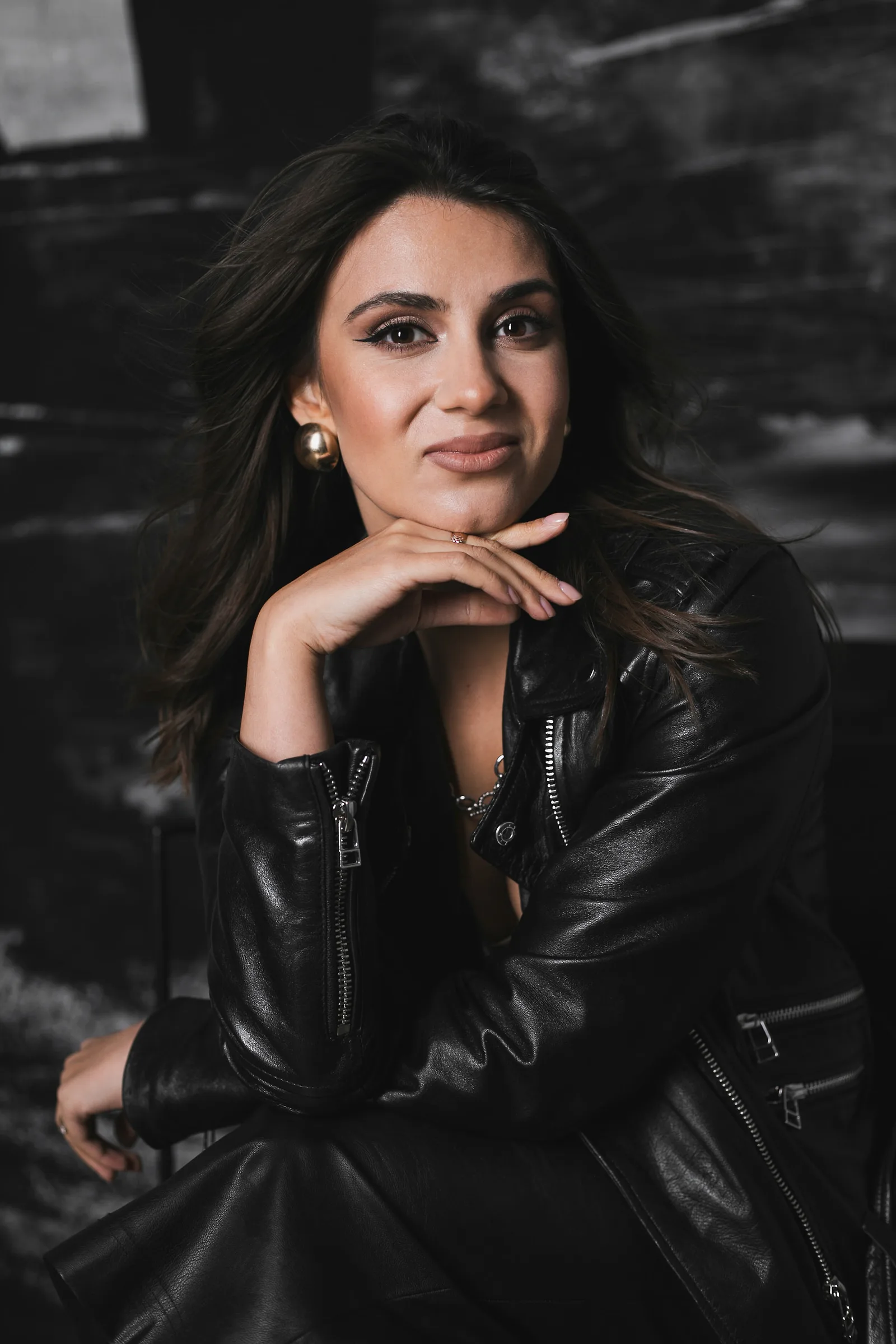
Texture is what makes clothes look expensive in a photograph. Tweed, knit, wool, shearling, leather, velvet, satin and fringe all catch light in their own way; thin, flat jersey usually doesn't.
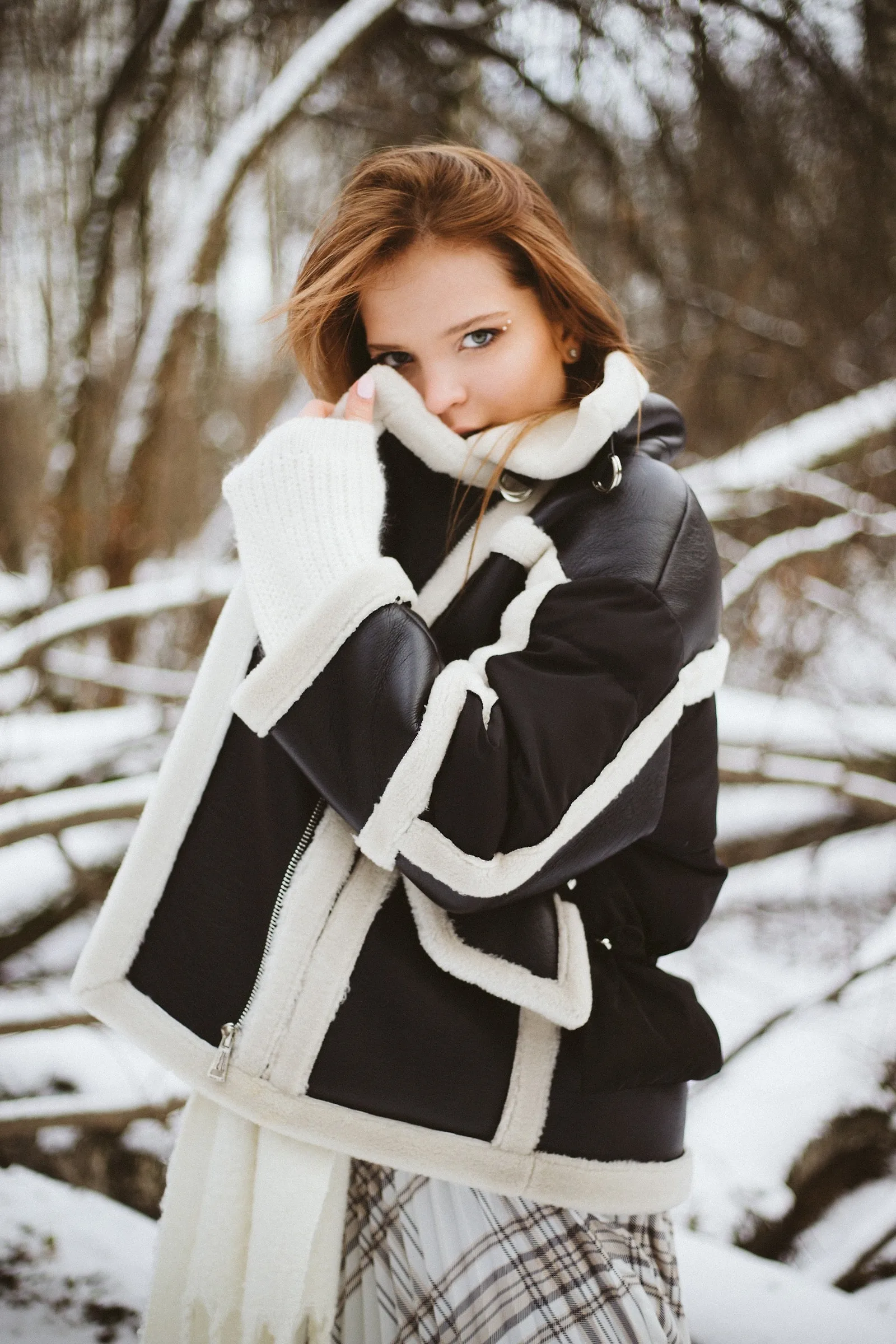
This winter portrait is just black and cream, and the textures do the talking: shearling, leather, a chunky knit pulled over the hand and a plaid skirt. The snow bounces light back into her face.
Fabric also behaves on camera:
- Satin and silk shine and show every crease. Steam them on the day and bring them on a hanger, not folded in a bag.
- Linen creases within minutes. Either love the creases or choose something else.
- Clingy fabrics show seams and underwear lines; a thicker fabric hangs better. Under light or clingy fabric, wear seamless underwear close to your skin tone, and bring a strapless bra for off-shoulder looks.
- Fringe, chiffon and wide sleeves move. Movement gives you a second kind of photograph, which is why they're good editorial choices.
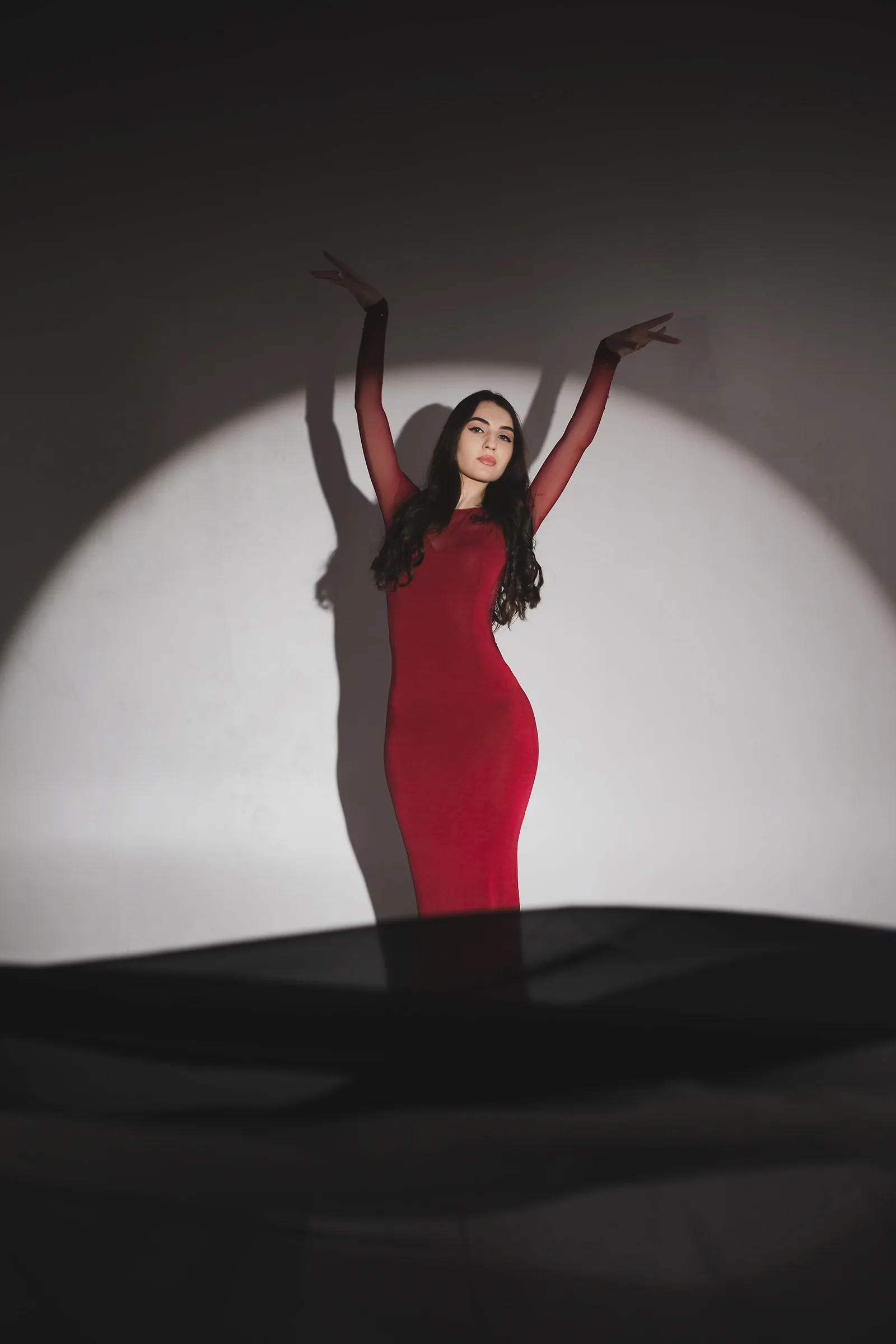
Here sheer chiffon, held wide, lets the light through and doubles the size of the shape.
Fit and silhouette
Wear clothes that fit the body you have on the day of the shoot. Too tight pulls and creases; too loose adds volume the camera exaggerates. Sit down in each outfit at home and check what happens at the waist, the buttons and the hem.
A belt, a tailored jacket or a cropped trouser gives shape. The black suit above is cut long, and the belt is what turns it into a silhouette. If you're self-conscious about an area, choose structure there rather than hiding under something shapeless.
For headshots, the neckline frames the face. Open collars and V-necks lengthen the neck; high, tight necklines shorten it. Men: a jacket that fits across the shoulders matters more than the brand of the shirt under it.
Layers, shoes and accessories
Layers give you more looks without more bags: a jacket on and off, a coat over the shoulders, a knit tied at the waist.
Shoes matter as soon as the frame is full-length. Bring the pair that suits the outfit, plus a pair you can walk in between set-ups, and break in new shoes before the day.
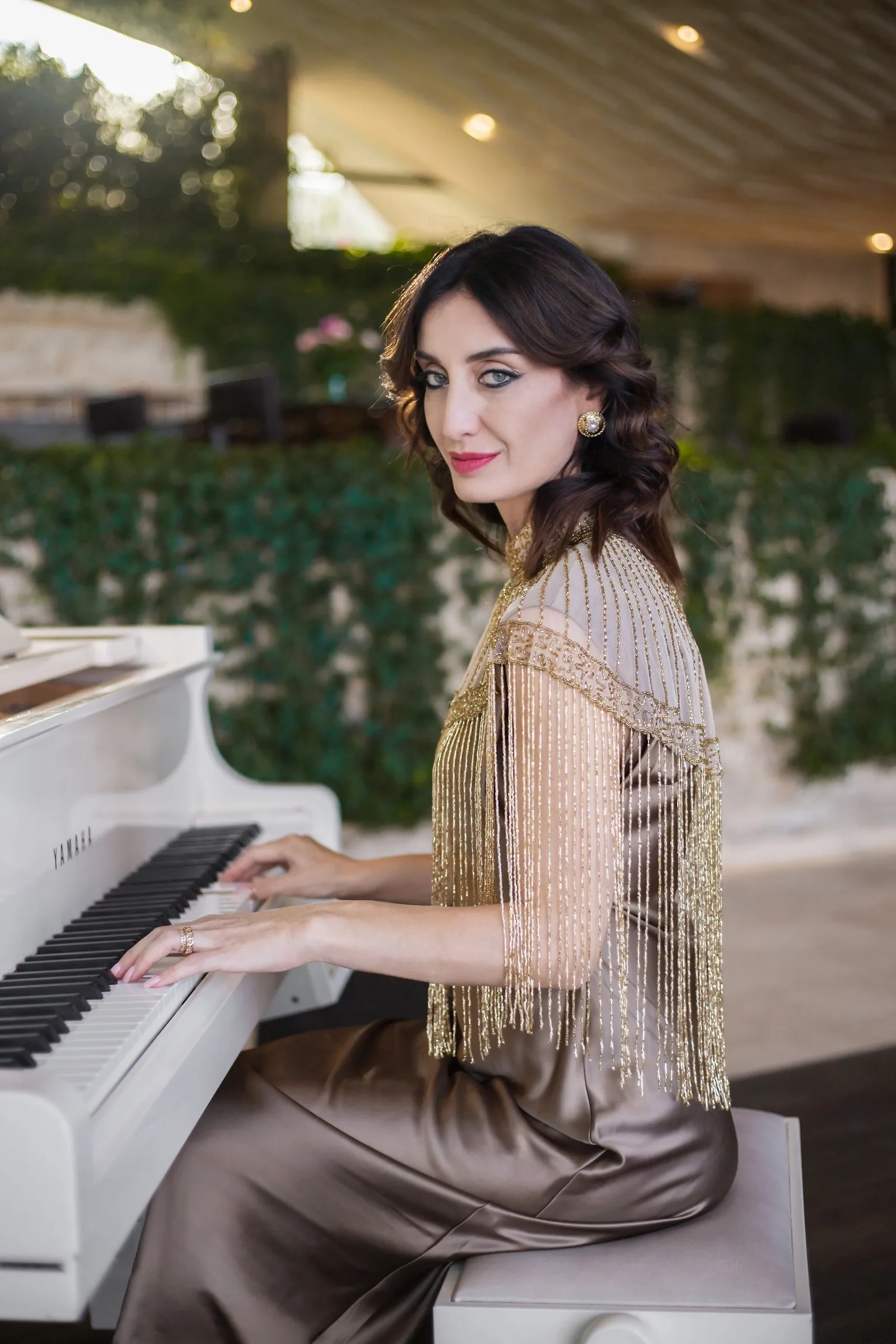
Pick one statement piece per look and let it lead. In this frame it's a beaded gold-fringed cape at a white piano. The satin dress under it is plain and the earrings are the only other gold, so the fringe carries the picture.
With jewellery, one strong piece near the face beats several small ones; earrings and rings show in close-ups, delicate necklaces often don't. If you wear glasses every day, bring them, because people should recognize you. If your lenses reflect, the photographer can move the light or tip the frames slightly down at the ears; an anti-reflective coating solves most of it.
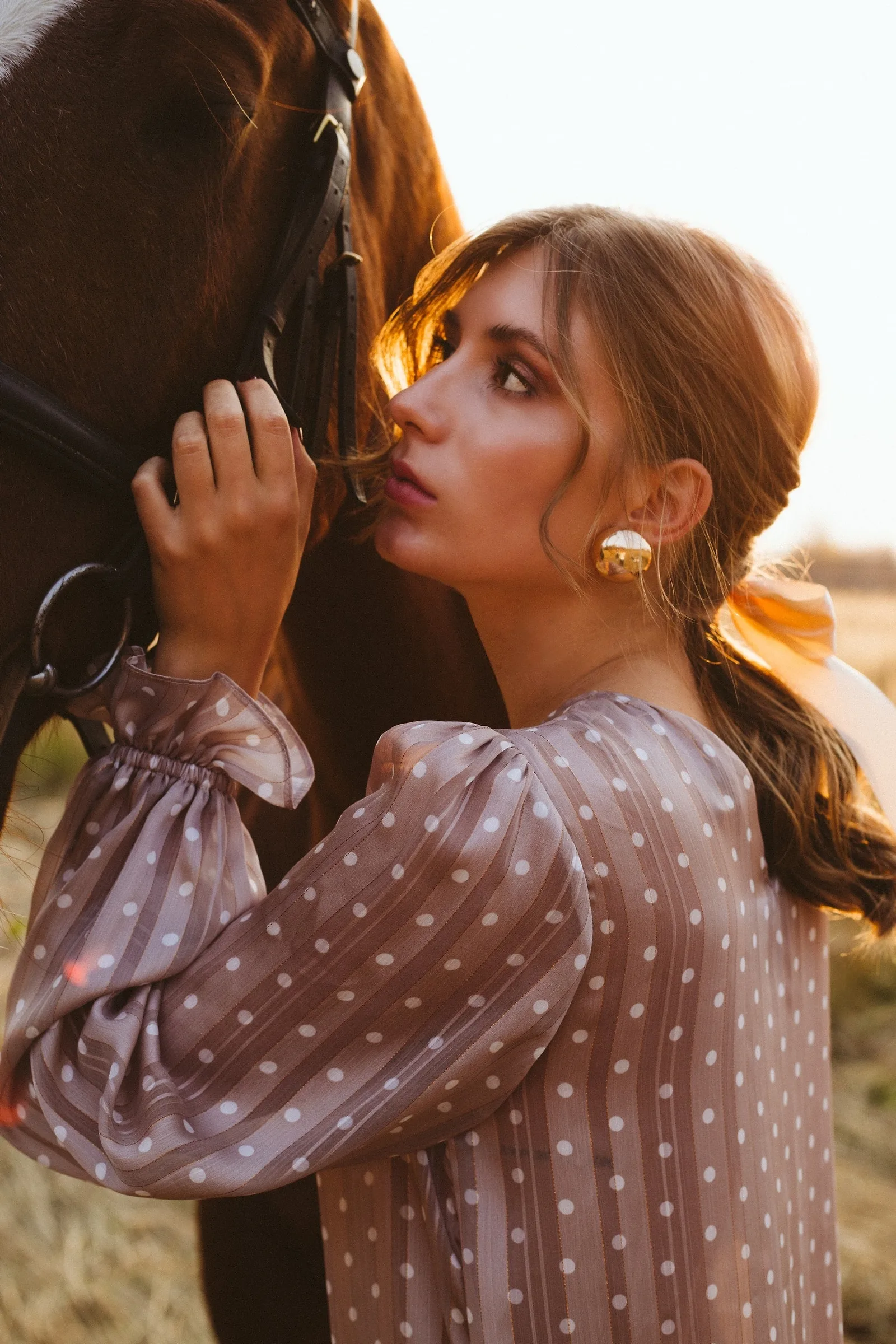
Grooming
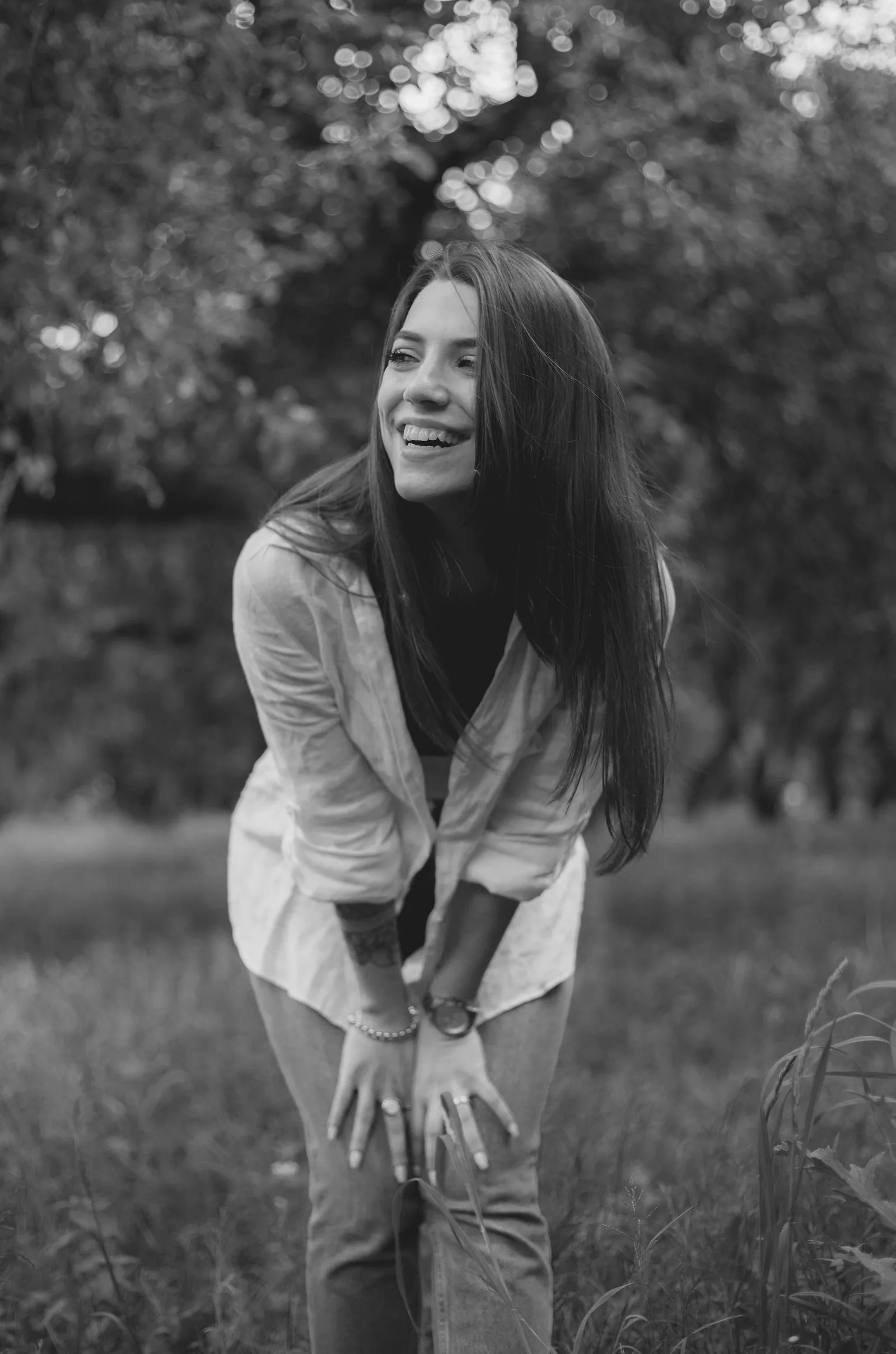
- Hair: get a cut a week or two before, not the day before, and bring a brush, hair ties and clips. In Toronto, the lakeshore and the Bluffs are windier than downtown streets. Wind can be a gift if you let it, as the shearling portrait shows; if you'd rather stay tidy, that's what the clips are for.
- Makeup: a little more definition than your everyday look, with a matte base. If flash will be used, ask your makeup artist about foundations with heavy sun protection, which can look pale under flash.
- Hands and nails: hands appear in more frames than you expect. Clean, neutral nails are never a mistake.
- Beards: trim a day or two before so the line looks natural.
- The hour before: skip tight socks, waistbands and bra straps. The marks they press into skin take a while to fade and show in off-shoulder and barefoot frames.
What not to wear
- Fine stripes, small checks and tight herringbone, which can shimmer into patterns on a digital sensor.
- Large logos and printed text, unless they are the point.
- Anything you need to keep adjusting: slipping straps, gaping buttons, a hem that rides up.
- Brand-new shoes you haven't walked in.
- Several busy patterns in one look, unless a stylist planned them together.
- Clothes that don't match the place: a sequinned dress in a muddy ravine needs a reason.
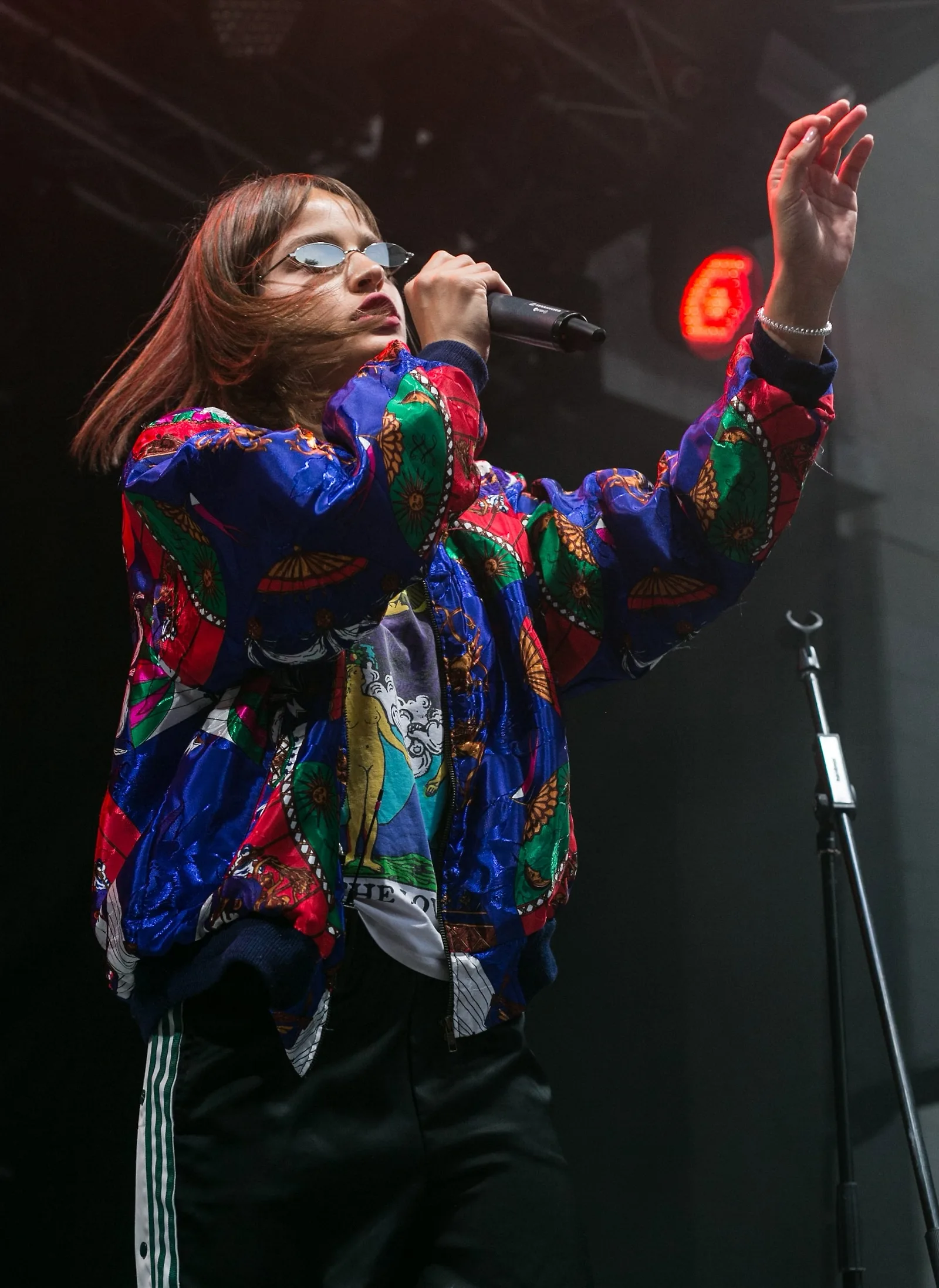
Stage is one of the exceptions. A bold patterned satin bomber under stage light, like this singer's, is exactly right: big pattern, strong sheen, tiny sunglasses and a performer who owns all of it. Pattern works when it's chosen on purpose, and on stage it has to be loud enough to read from the back of the room.
Toronto seasons
- Winter: wool coats, shearling, knitwear and scarves photograph beautifully, and snow lifts the light. Wear thermal layers under the outfit, keep a warm coat on between frames, and bring hand warmers, because red hands and noses take time to fade.
- Spring: rain and mud. Bring an umbrella, a towel and shoes for wet ground, and keep a lighter layer for when the sun comes out.
- Summer: it's hot and humid. Choose breathable fabrics, bring blotting papers and shoot early or late in the day, when the light is softer anyway.
- Fall: rust, olive, burgundy, camel and cream echo the leaves; very bright orange can disappear into them. A coat is a look of its own.
How many looks to bring
For a 20 to 30 minute headshot, one look and a spare top. For a one-to-two-hour portrait session, two or three. For editorial, settle the number with the team, because each look usually means new styling and sometimes new light. Every change takes time on the clock and, at many studios, a step up in price; our guide to what a photoshoot costs in Toronto shows how looks affect quotes.
Your packing list:
Once the clothes are settled, the next question is what to do in them; that's in how to pose for photos when you're not a model.
FAQ
What colours look best in photos?
Solid, medium-to-deep colours such as navy, burgundy, olive, camel, soft pink and deep green suit most skin tones and most light. Pick one colour family per look and let one accent stand out.
What should you not wear to a photoshoot?
Fine stripes and small checks, big logos, clothes you keep adjusting, untested shoes and several competing patterns. Very bright neon close to the face is also risky.
How many outfits should I bring to a photoshoot?
One look and a spare for a short headshot session, two or three for a one-to-two-hour portrait session. Bring one backup for your main look.
Is black a good colour for photos?
Yes, especially with texture or against a lighter background. Avoid flat black on a black backdrop unless you want the body to fade and only the face to show.
What should I wear for headshots?
A well-fitting top or jacket in a solid colour, with a neckline that frames your face, and one simple piece of jewellery at most. Bring a second colour in case the first blends into the background.
Planning a portrait or editorial shoot in Toronto? Tell us what you have in mind, and send the looks you're considering.