Editorial Photoshoot Ideas: 14 Concepts and How to Plan One
Disolo Art · Updated
The best editorial ideas are small stories, each built on one concept and told through styling, location and light, with a single frame of movement. Here are 14 you can shoot in Toronto, and how to plan one.
The best editorial photoshoot ideas are small stories. Each has one concept, told through wardrobe, setting and light, with a single frame of movement to break the stillness. Decide those five things in that order and every picture in the set will look as if it belongs to the same world. Below we take two of our own stories apart, The Rider and Veil & Fire, and then give 14 ideas you can shoot in Toronto.
What makes a photoshoot editorial
An editorial shoot tells a story across a series of frames, the way a magazine spread does. A commercial shoot sells something specific; an editorial sells a mood. The same dress can be either. Shot on a white background in even light, it's a product photo. Put it in a dark theatre under a single spotlight and it becomes part of a story. A personal portrait session can be editorial too, as long as it starts from a concept and the frames add up to something.
The five decisions behind an editorial shoot
Every editorial comes down to five decisions, made in order: concept, styling, location, light and movement.
1. Concept: one sentence with a turn in it
Write the idea as one sentence before anything else. The intros of both stories do exactly that:
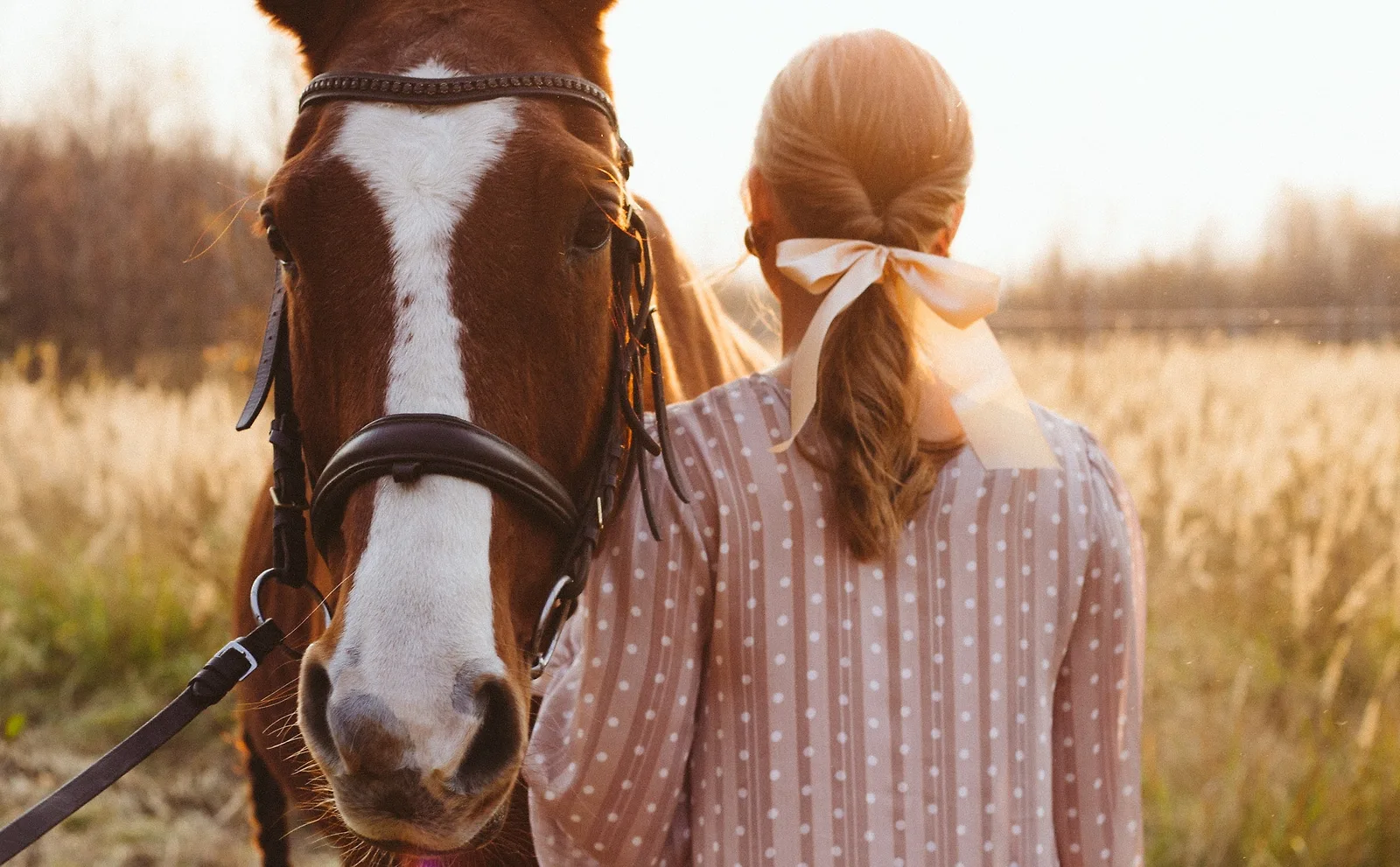
A rider and a chestnut horse, from the warm half-light of the arena to an autumn field in low golden sun. Trust, tenderness and one moment of pure power.
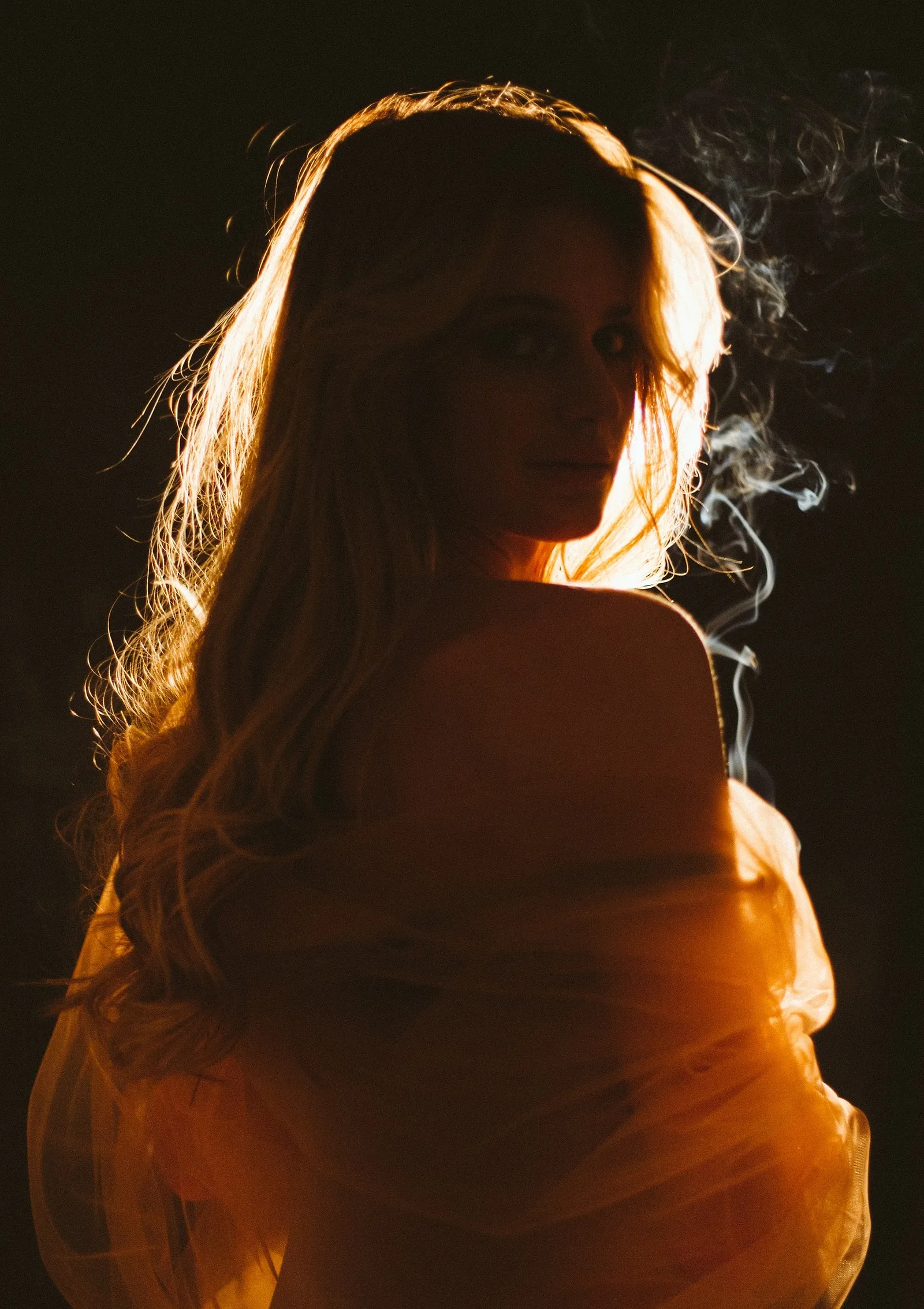
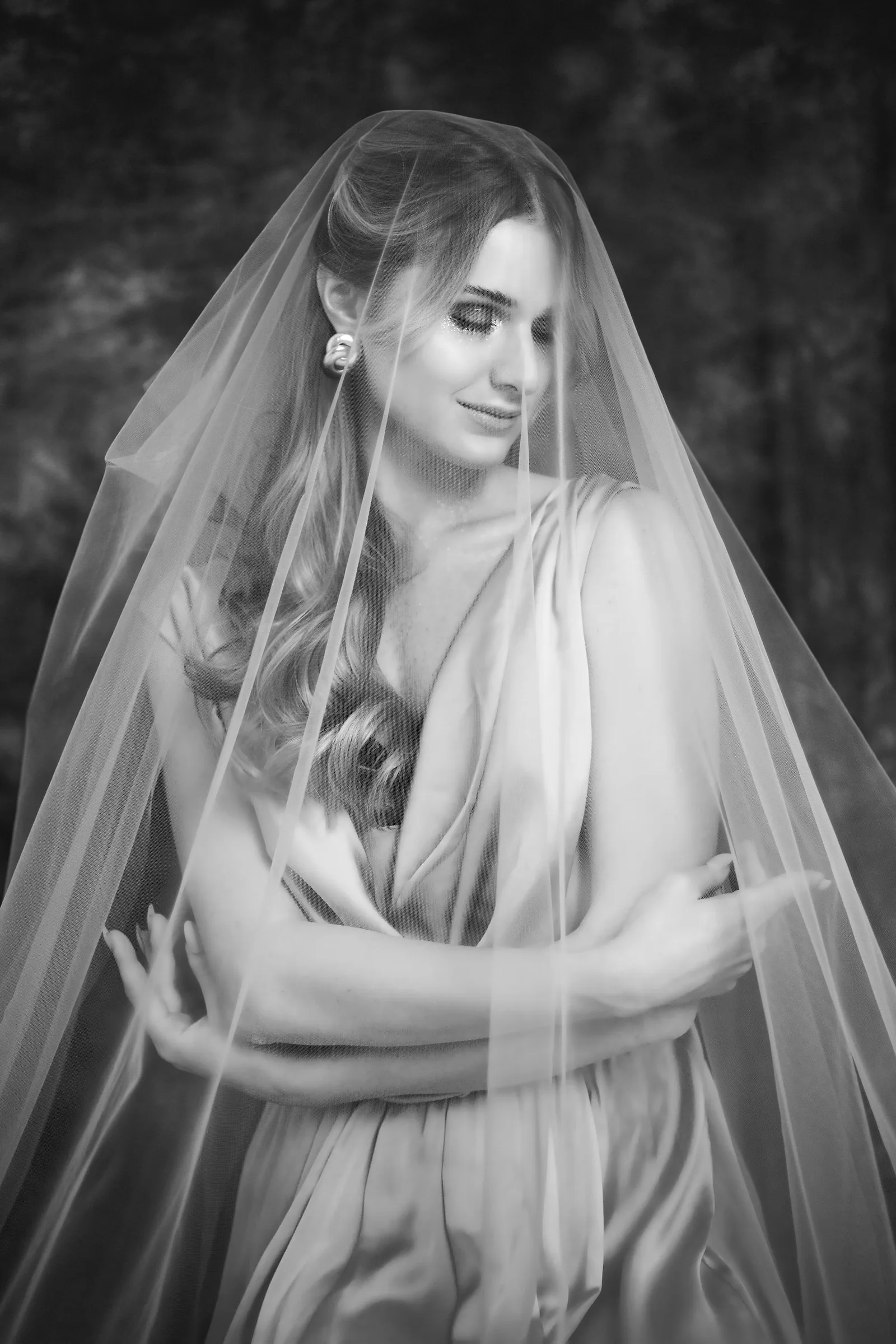
A long veil and lilies in soft studio light give way to smoke and flame. One session, two moods: stillness and a slow-burning glow.
Both sentences have a turn, from arena to field and from stillness to flame. That turn gives the series a beginning and an end, and it tells everyone on set what each frame is for.
2. Styling: a palette, not a pile of outfits
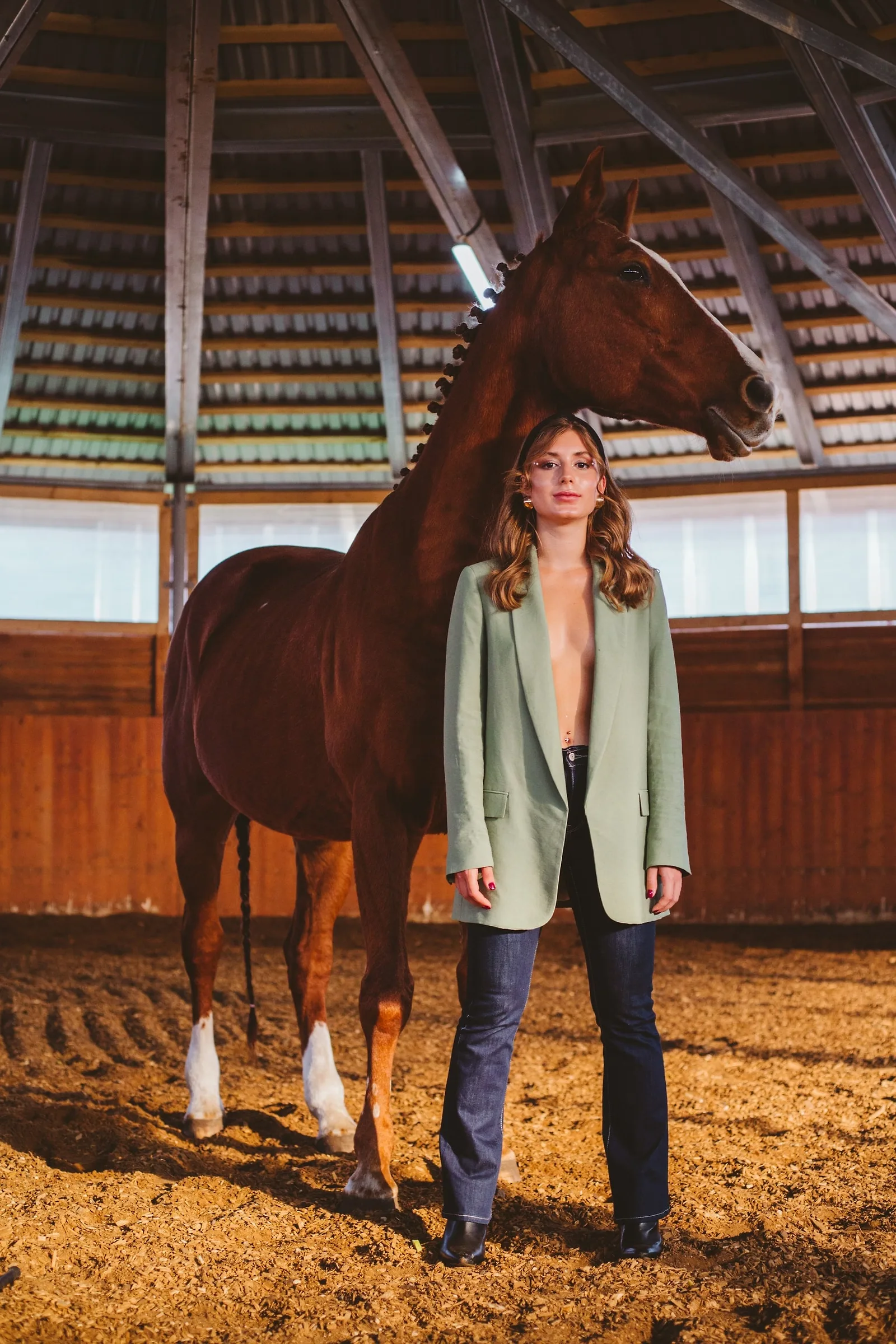
In The Rider, every look goes with the horse's chestnut coat:
- In the arena: an oversized sage blazer with dark flared jeans and black boots.
- For the cheek-to-cheek close-ups: an off-shoulder sage jacket.
- In the field: a dusty-mauve dress with white polka dots and full sleeves, and a satin ribbon tied into a braid.
- Among the birches: a fluffy white sweater.
- For the rider on the rearing horse: white and cream.
Gold dome earrings repeat through the set and tie it together.
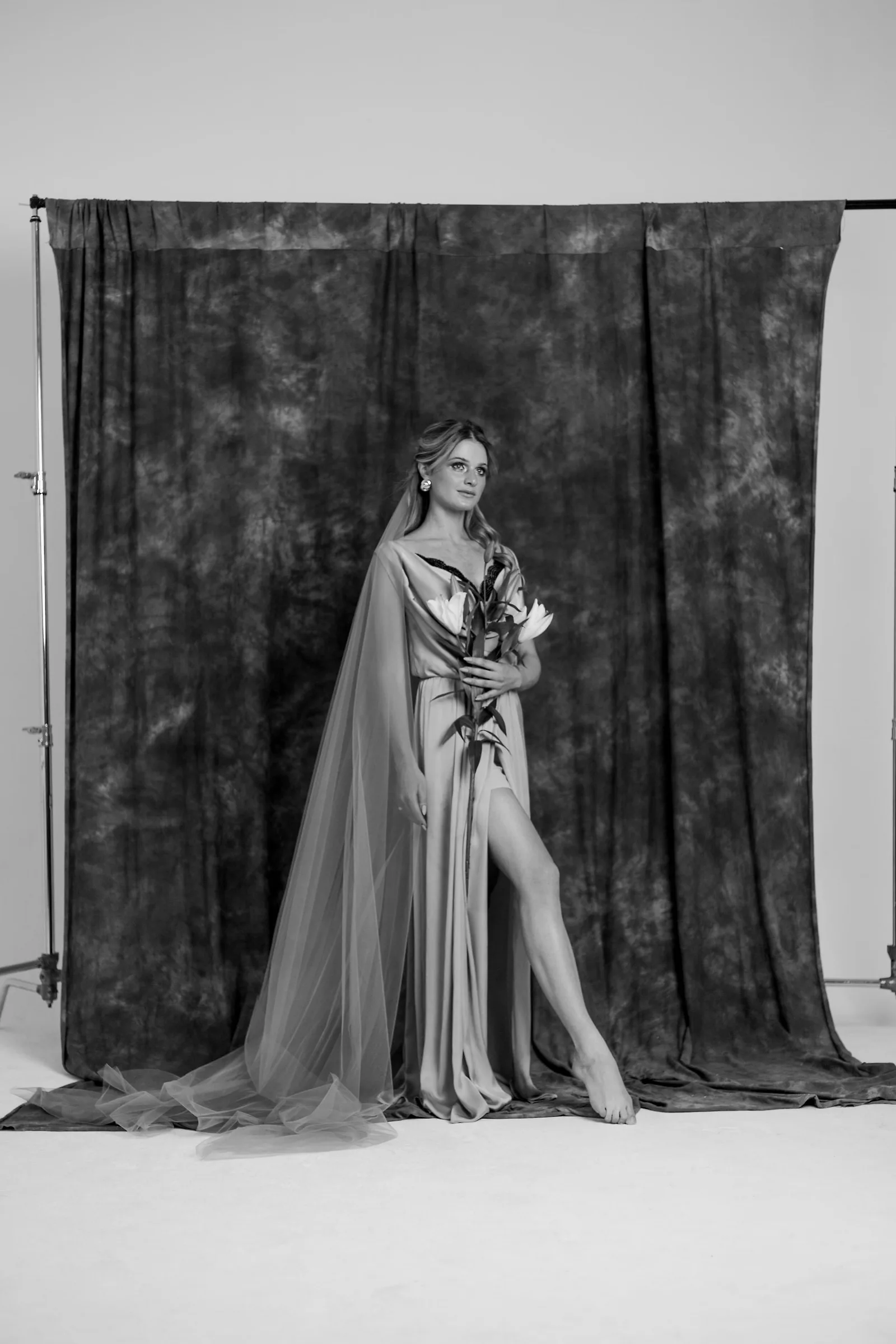
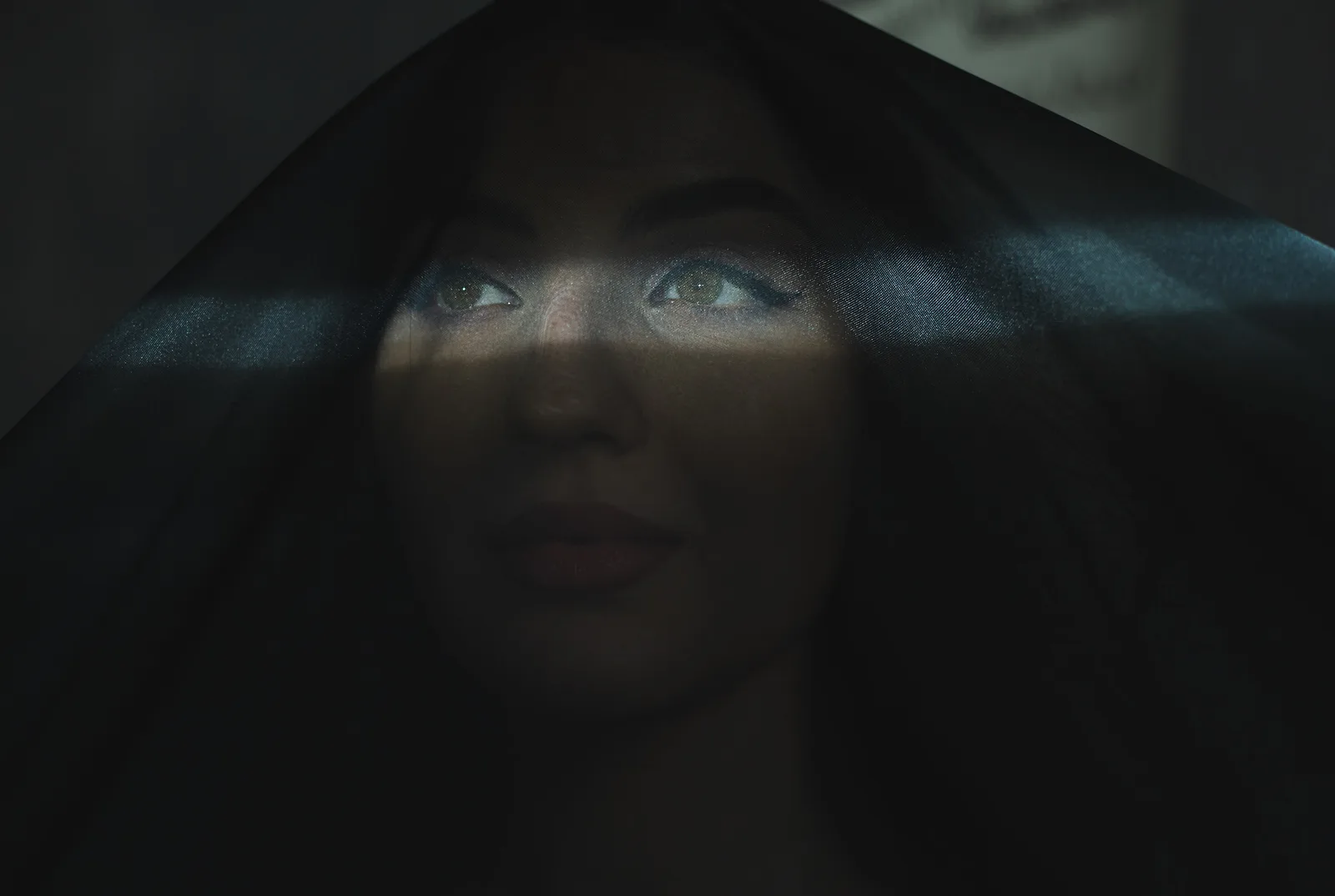
Veil & Fire works with fewer pieces: pale satin with a black lace edge, sheer tulle and white lilies. In the black-and-white half, a long veil and the lilies carry the stillness. In the second half, tulle sleeves lit from behind turn amber.
Pick three or four colours and one recurring detail, and plan every look around them.
3. Location: a set that adds one idea
The Rider uses two places that say different things. The round indoor arena, with its wooden walls, roof beams radiating from the centre and sand underfoot, gives warmth and structure. The field at the edge of a birch and spruce forest has space, dry autumn grass and a low sun.
Veil & Fire stays in a studio and even shows it. One full-length frame pulls back to reveal the painted backdrop on its stands and the white floor around it, so the set becomes part of the story. The second half drops the backdrop and lets the background go black.
Choose a location for what it adds to the concept, and leave out anything that competes with it.
4. Light: decide the mood before the day
The Rider moves through three kinds of light:
- In the arena, soft daylight comes in through the windows, warm on the wood and the horse's coat.
- In the field, the low sun is a backlight. It sits behind the subjects, outlines hair and grass, and in one frame flares straight into the lens.
- For the rearing frame, the sky is pale and overcast and the light flat and even, so the shape of the horse carries the picture.
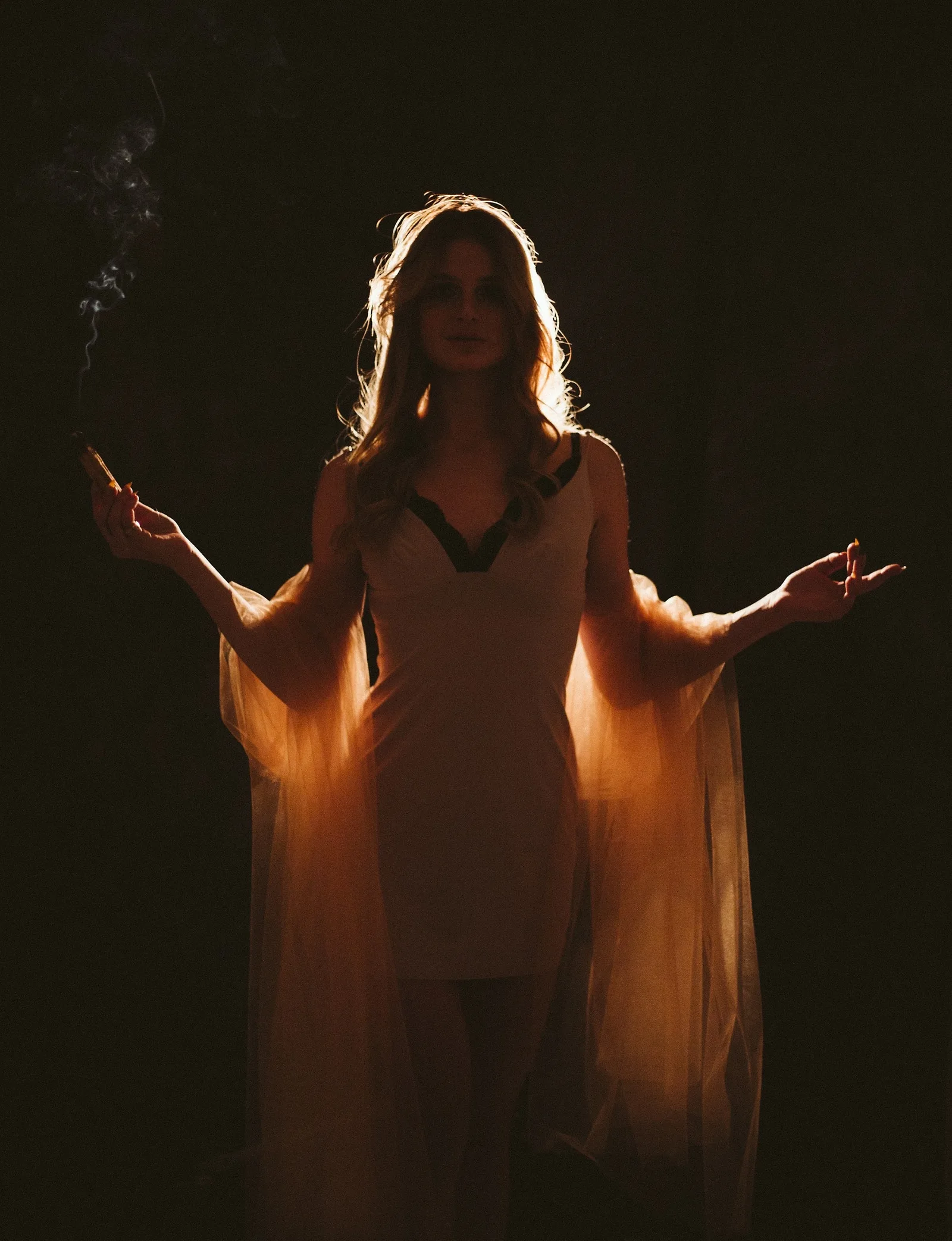
Veil & Fire changes the light with the mood. The veil and lilies are in soft, frontal light, in black and white. Then comes one strong warm light from behind, with the background left black. That backlight is what makes the smoke and the tulle visible at all; lit from the front, both would disappear.
Name the light in your plan (window, backlight, overcast or a single hard spot) and choose the time of day around it.
5. Movement: one frame that breaks the stillness
Most of a good editorial is quiet, and then one frame moves. In The Rider it's the horse rearing at the forest edge, the rider in white, a professional horsewoman, sitting composed on top. That's the "one moment of pure power" from the story's intro. In Veil & Fire it's the frame with her arms open and palms up, a thread of smoke rising from the stick of palo santo in her hand. Plan your peak frame the way you'd plan a cover, and give it quiet frames on either side.
Never ask a horse to rear for a photo. A moment like that is up to a trained horse, its rider and its owner.
14 editorial photoshoot ideas you can shoot in Toronto
Each idea starts from a concept, then the styling, the light and a kind of place. Many good locations are City parks, beaches or private sites, so check our Toronto photoshoot permit guide before you book anyone.
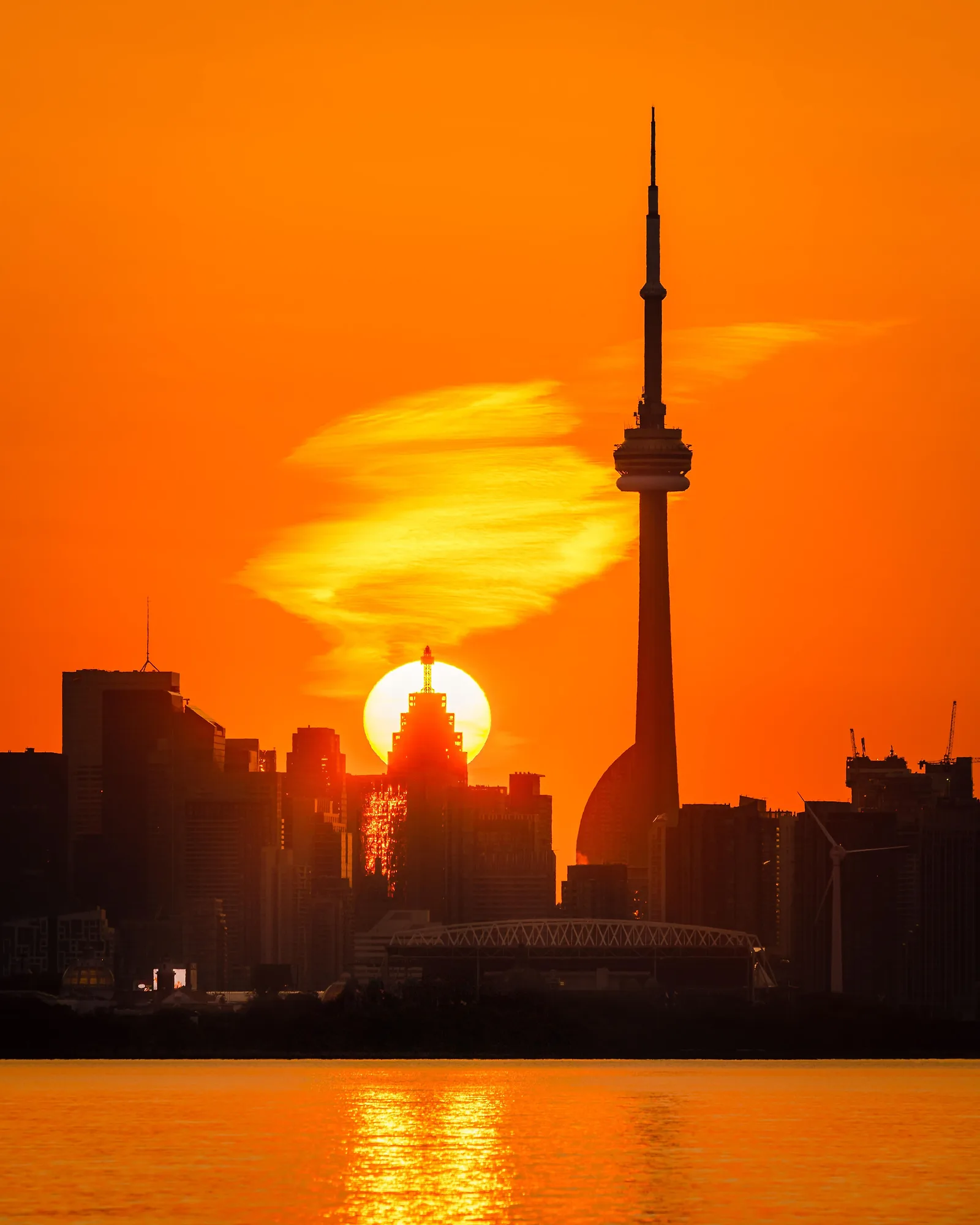
- Torontohenge silhouette. A figure walking into a corridor of light. Long, dark tailoring makes a clean shape against the glare. The sun sets straight down Queen and King on a few evenings each October and February (dates and times); shoot from the sidewalk, never the road.
- The lake as a coastline. On camera, Lake Ontario reads like a sea. Linen, bare feet and wind in the hair work at golden hour, or under a heavy sky before the rain. At the first thunder, leave the beach: if you can hear it, you're within reach of lightning, and Environment Canada says to wait 30 minutes after the last rumble before going back out. The Scarborough Bluffs give the lake a coastline of cliffs. City beaches are parkland, so a hired shoot needs a park permit.
- Winter whiteout. Shearling, wool and red hair against snow, with the wind doing the styling; our windswept shearling portraits are built on exactly that. The soft light of a grey January afternoon is enough.
- Ravine in October. Rust, ochre and olive clothes against turning leaves, backlit by a low sun through the trees. Toronto's ravines give you a forest without leaving the city. Down in a ravine the sun drops behind the valley wall and the trees well before sunset, so start about an hour before golden hour.
- One colour, head to toe. A strapless red gown, long gloves and a wide white hat that hides the face. One strong colour story can carry a whole series, as our red-gown frames show.
- A single spotlight. One hard light throws a circle on a grey wall, and a figure in a red gown raises her arms inside it. You need only a dark studio and one spotlight.
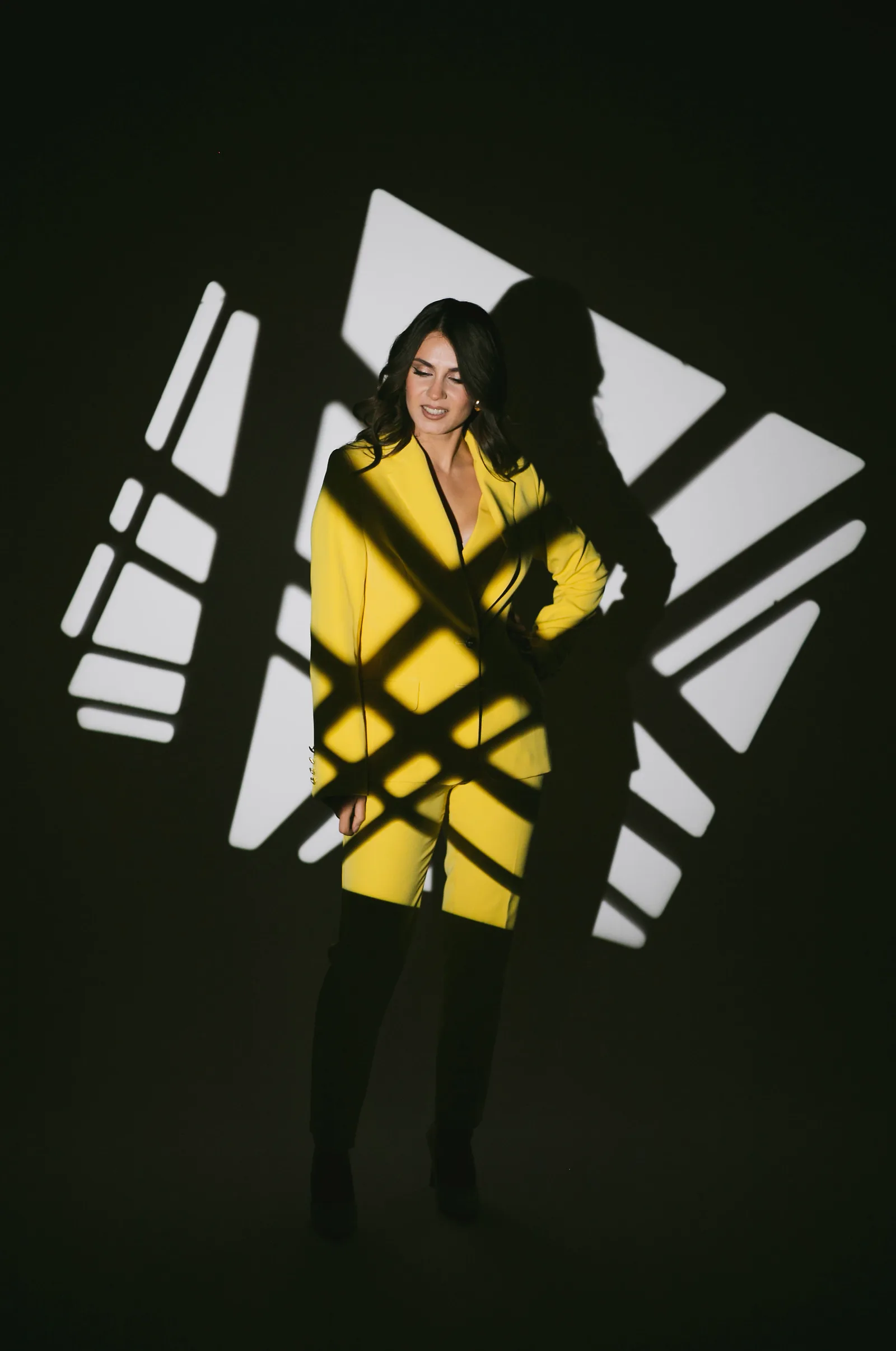
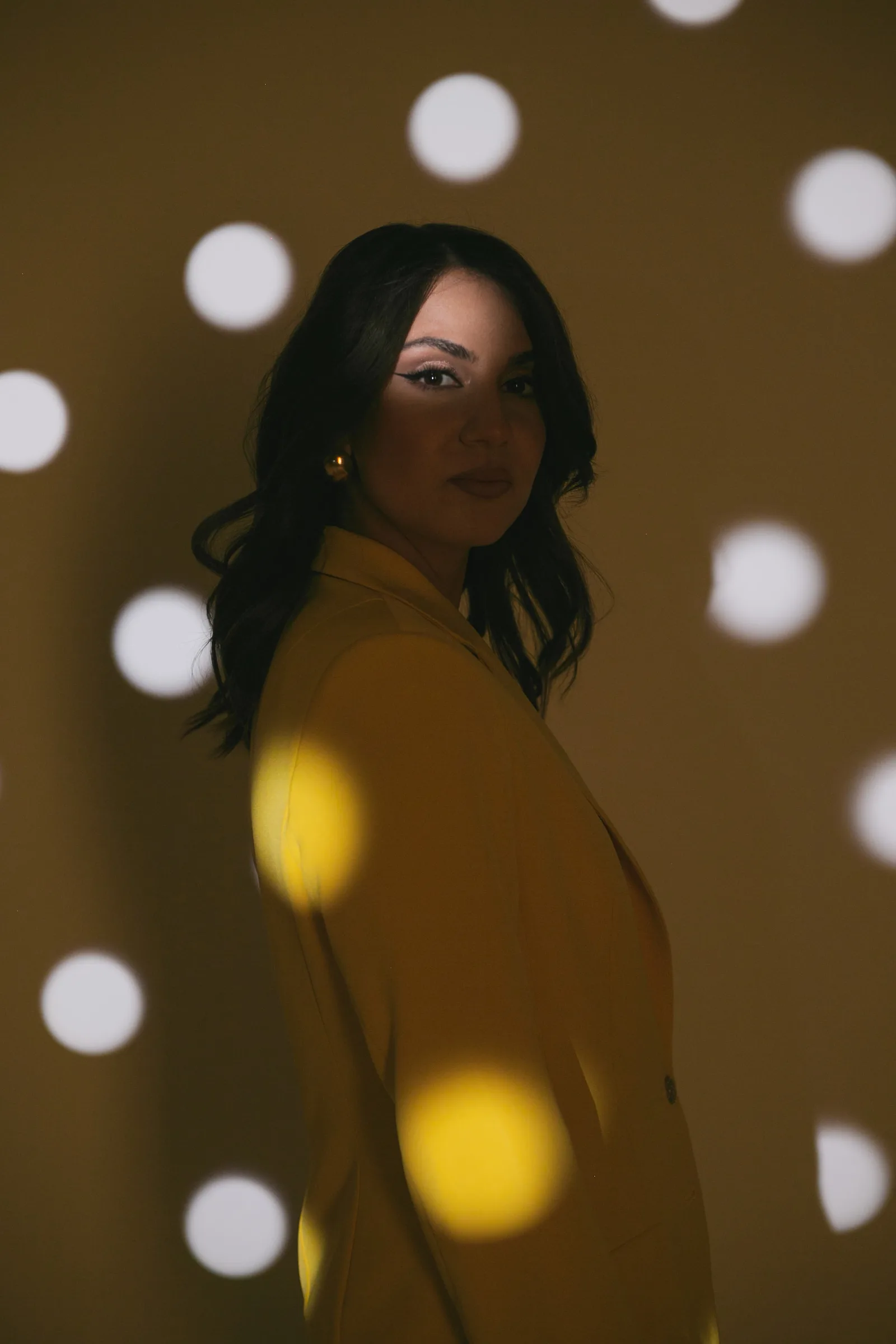
- Pattern light. A projector throws white and yellow dots across a dark set, and only one eye catches the light. It is cheap to build, and every frame changes as the model moves.
- The stage. A singer in a red gown, alone in a pool of stage light in an empty theatre. Rent a small theatre or rehearsal hall for an hour and shoot from the seats as well as the wings.
- The piano. A white piano, a gold-fringed cape and an ivy-covered wall; the instrument gives the hands something to do. Look for a venue or a loft with a piano and ask for an hour before it opens.
- Café morning. A newspaper, a phone call and a coffee under a bright painting: an ordinary morning, styled. Ask an independent café for an early slot before opening.
- Courtyard dance. A barefoot dancer arching back against a carved door, or raising her arms under a stone arch. In Toronto, look for stone and arches on campus: the cloister at Knox College or the archways of University College, both bookable with a permit. For brick instead of stone, the Distillery District sells its own two-hour permits, but takes no applications from October 31 to the end of December 2026.
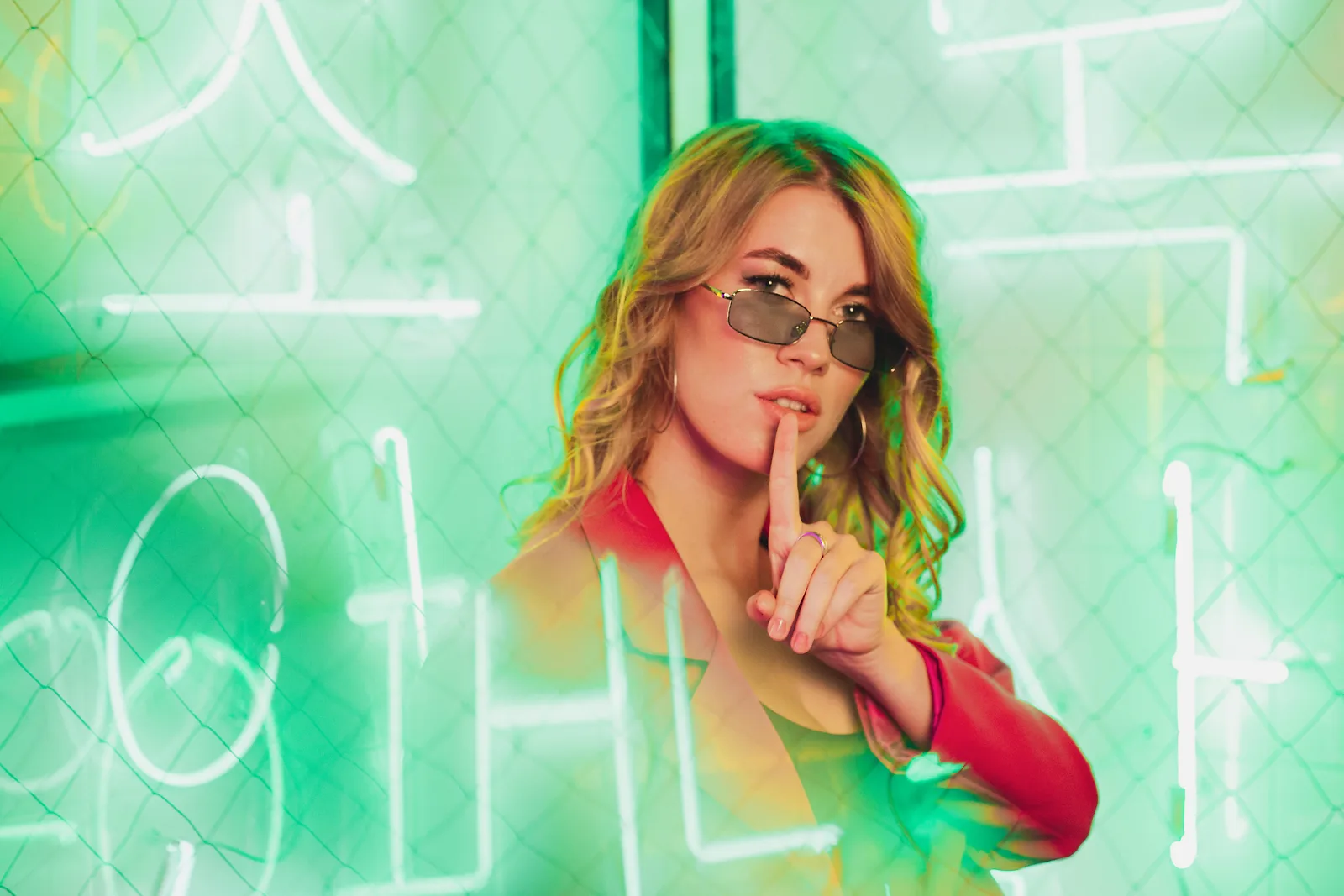
- Conservatory green. Palms and glass in the middle of winter, with a knit, round sunglasses and a lot of green. The Allan Gardens Conservatory is City-run, and commercial shoots there are booked in two-hour slots.
- Horse and rider. Trust and power, as in The Rider, with an arena for structure, a field for light and the horse's owner or handler on set for every frame. Our horse photoshoot guide covers concepts, wardrobe and safety.
- Smoke, flame and wreaths. A slow glow from behind with smoke made visible by backlight, or leaf wreaths around a bonfire on midsummer night. Fire needs a safety plan and, in Toronto, the right permission; our fire photoshoot guide covers both.
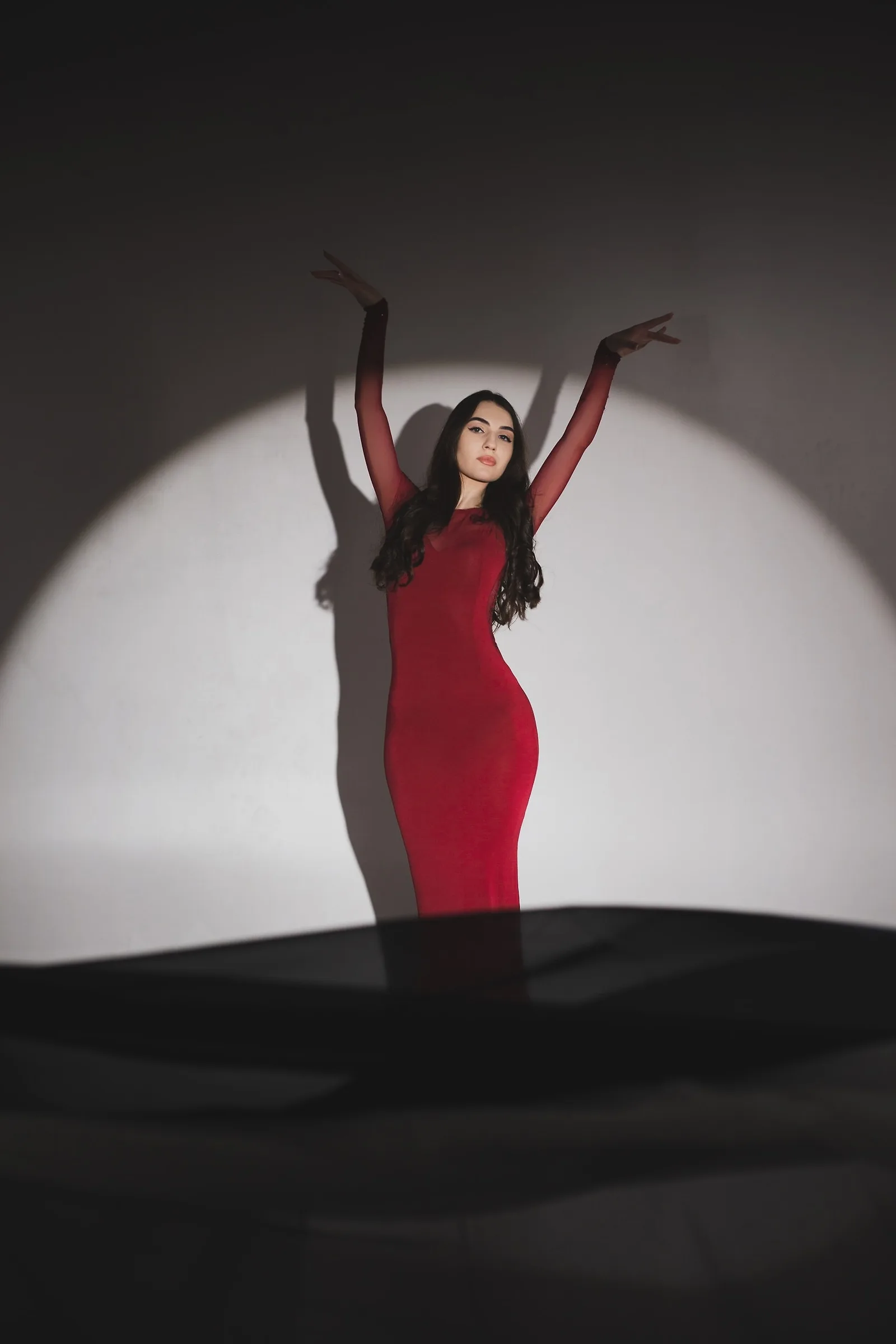
This is idea 6 as we shot it. One hard light makes a crisp circle and a crisp shadow, and the red gown is the only colour in the frame.
FAQ
What is an editorial photoshoot?
It's a shoot planned to tell a story across several frames, like a magazine spread, rather than to sell one product. It has a concept, consistent styling and light, and a sequence with a beginning and an end.
What is the difference between an editorial and a commercial shoot?
A commercial shoot is made for a client to sell a specific product or service, which has to be shown clearly. An editorial is made to tell a story or set a mood; if a product appears, it serves the story.
How do you plan an editorial photoshoot?
Write the concept as one sentence. Then choose a palette and three or four looks, a location that adds to the idea, the light (and with it the time of day), and the one frame of movement the series builds to. Put it all on one page for the whole team.
Can an editorial shoot be done outside?
Yes. The Rider's field frames were made outdoors in low golden light. Outside, you plan around the sun and the weather instead of lights, and in Toronto you check whether the location needs a permit.
How do you pose for an editorial shoot?
Hold the concept rather than a smile. Move slowly, keep long lines, and give the hands a job: a veil, lilies, a horse's mane. Keep moving between frames so the photographer can catch the moments in between.
Plan your own editorial
See more of our editorial photography in Toronto, or send us your idea, even if it's only a mood board and a date.
Sources
Permit details as of October 2026:
- City parks and conservatories, commercial photography: City of Toronto, weddings, ceremonies and commercial photography in parks
- Distillery District photo permits and the November–December pause: The Distillery Historic District, photography permits