Trade Show Booth Photos That Still Work After the Show
Photograph the booth empty before the doors open and busy at the peak hour, and write down the five frames you need before you book anyone.
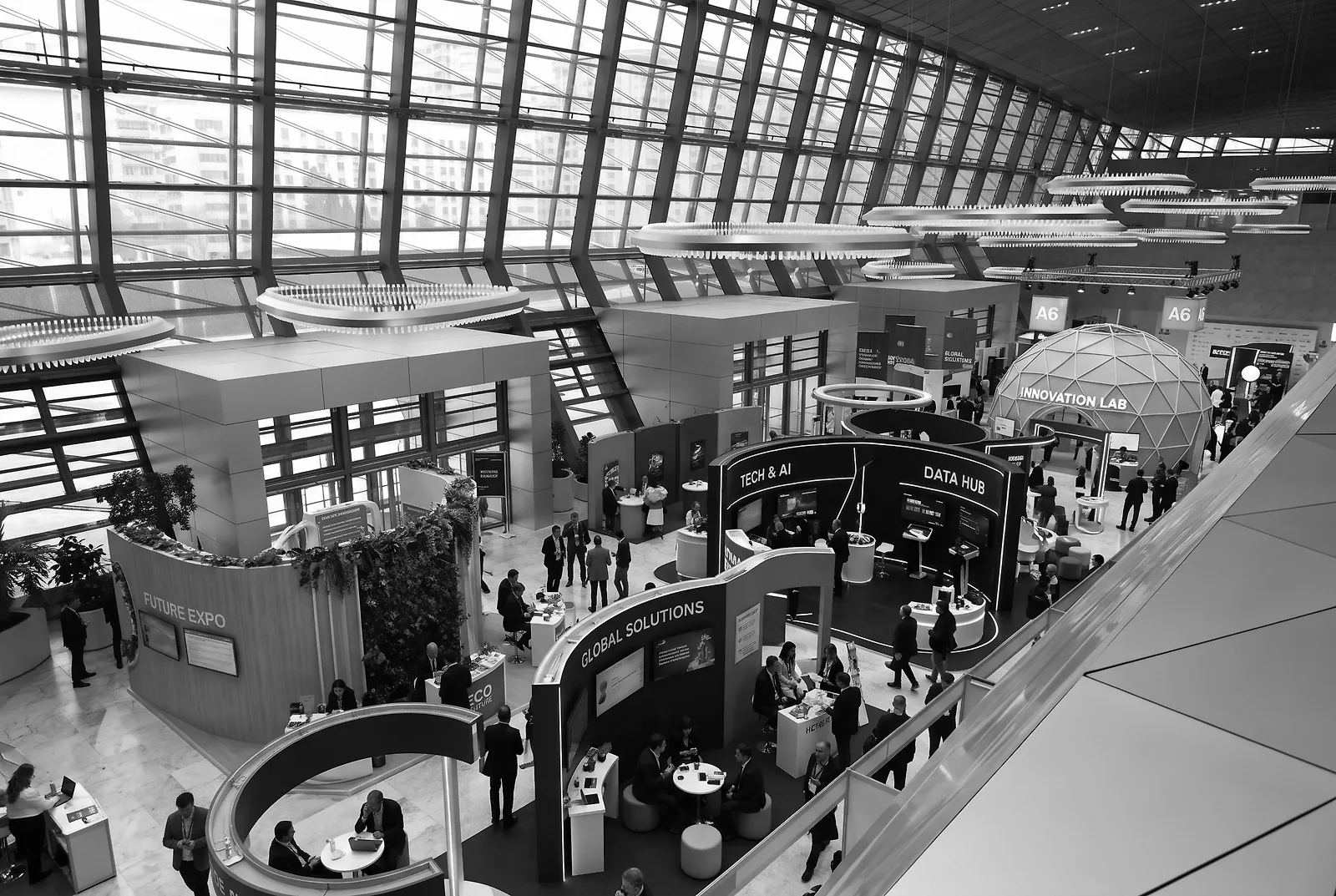
Photograph a trade show booth twice: once finished and empty before the doors open, and once full of people in the busiest hours. The empty frames show what you built. The busy frames show that people came. You can't get either one after the show has packed up, so decide both before you arrive.
What goes wrong on the show floor
The hall's lighting isn't yours. Overhead lamps, your own screens and the neighbour's spotlights all have different colours, and a coloured carpet throws its tint up onto faces. Neighbouring booths crowd the edges of every frame, and the aisle is full of people who came to see someone else.
Your team is busy working. Visitors stop, talk and move on. A product demo draws a crowd for a few minutes, and if the photographer wasn't told when it starts, it's over before the camera arrives.
The calendar works against you as well. Access to the floor is often limited before a show, and the booth looks its best only in the short gap between the last cable being taped down and the first visitor walking in. Check the exhibitor manual, or ask the show organizer, when you can be on the floor with a photographer, and whether the show has its own rules or its own official photographer.
Test: write five frames before you book
Before you talk to any photographer, write down the five pictures you would need to explain your booth to someone who wasn't there. For example:
- The whole booth from the aisle, the way a visitor first sees it.
- The product or demo close up, in use.
- A conversation between a visitor and someone on your team.
- The team together at the booth, looking relaxed.
- The signage in context, so next year's show and your sales deck can reuse it.
If you can't write five, you aren't ready to brief anyone, and a photographer shouldn't be left guessing what the booth is for. If you write ten, cut back to the five you would put in a proposal; the other five are extras.
Then put a time next to each one. The empty-booth frames go before the doors open. The demo frame goes at the demo's scheduled time. The conversation and team frames go in the busiest hour, when there's a real queue and nobody is watching the camera.
Visitors and neighbouring booths
Visitors will appear in the background of most busy frames. Tell your team that photography is happening, and put a small sign on the booth saying so. If a visitor asks not to be photographed, the photographer steps aside. Keep the frames pointed at your own booth too, because the neighbouring exhibitors haven't agreed to appear in your recap.
Get the pictures to the people who need them
A trade show produces requests. Sales wants frames for follow-up emails, marketing wants graphics for the next show and the agency wants a case study. Put the set in a private event gallery so all of them can pull what they need from one place.
What to send before the show
Send the five frames with their times, the show dates, the hall and your booth number, and ask the show organizer when exhibitors can be on the floor. A photographer needs those details to plan trade show booth photography in Toronto, and you can tell us about the event once you have them.